• Home
  • Projects
    • Hydraulics
    • Kinematics
  • Automobile
    • Automotive Innovators
    • Electric vehicles
  • Inventions
    • Inventions
    • Intresting Facts
    • Stories
  • Aviation
    • Aircrafts
    • Drones
  • About Us
    • About Us
    • Terms in use
    • Privacy Policy
    • Disclaimer
  • Contact Us
  • Sitemap

The Engineeringity

 TATA MOTORS has been indulging in the business of automobile manufacturing since 1945. Mahindra and Mahindra have been developing vehicles for the country for the last 77 years. Bajaj Auto came into existence in the year 1945 and there are many such renowned companies involved in the manufacturing of internal combustion-based vehicles in our country.

Electric Scooters | Indian Brands Electric Scooters

The latest company involved in the business of automobile manufacturing was Hero Motocorp which came into existence with the name Hero Honda. Hero Honda started manufacturing automobiles in our country in the year 1984 with all these facts. Over the past 38-40 years not a single new automobile company has evolved in India which develops vehicles based on engines with Internal Combustion, this thing is happening not only in India. In Japan too, the last company which evolved as an automobile manufacturer was Honda which came into existence in the year 1946 the same goes for other countries as well believe me or not Jeep is the latest automobile manufacturing company in America that came into operation in the year 194. There is a thing common to all automobile manufacturing countries which manufacture ample amounts of vehicles for the past 50-70 years. No new company has come into existence that manufactures vehicles based on ICE Engines. And there are some solid reasons behind this fact.

A new trend that is linked to Electric Vehicles

But we all can experience a new trend that is linked to Electric Vehicles. On one side, no new ICE-based vehicle manufacturer could be observed for the past many years in the whole world. On the other side, many new EV manufacturing brands are evolving. Especially Electric Scooters, Newer brands are based in such countries which evolved as a dark horse. But if I get specific to India. The evolution of EV manufacturers in India is as prominent as the foreign countries or maybe manifolds more than the foreign countries. India has evolved as the epicenter of two-wheeler EV manufacturers and there is an estimation that there are 25-30 such two-wheeler EV manufacturers in India, An estimate is done because there are many two-wheeler EV manufacturers which are developing EVs on a very small scale. Not much information is available about these companies on the Internet. Neither of their websites gives any solid information. Now the point to note is how does this happen? Because for the past many years, no new conventional automobile manufacturer has evolved in our country. 

Whereas many new EV manufacturers have come into existence in the past 5-10 years in India. There are two possible answers to this question the first answer is the manufacturing of EVs is very simpler than the manufacturing of ICE Engine based vehicles. And the second answer is, Chinese Imports it can be observed in India that many EV manufacturers are developing their EV products which are derived from Chinese EVs, therefore, you would get to know this in the future.

Rebaging the Chinese EVs

Which of the EV manufacturers is rebadging the Chinese EVs and how could the Chinese brands capture the Indian EV market through such activities Which happened earlier in the Indian Smartphone Market you would also get to know about the EV manufacturers which are fully developing EVs in India on their own. Before getting specific to India We should understand, Why is the manufacturing of EVs very simple than the manufacturing of an IC Engine based vehicle?

Due to this, the Indian EV market has been crowded with many new brands. Many of you must be aware of the fact that a conventional two-wheeler or four-wheeler consists of pistons in its Engine's moves due to controlled combustion. But this alone is not enough for the operation of a car. This vertical motion is converted into rotational motion through the crankshaft and then the rotation of the wheels is done through many rotating parts in between. For the operation of an ICE Engine based vehicle, many things rotate like gears, clutch, flywheel, and many types of pulleys facilitate the operation of the air conditioning system and liquid cooling system of a car timing chains, etc.

Complexities between Convention ICE Engine and Electric Vehicles

A conventional car consists of around 200 parts that facilitate the smooth operation of a car all the parts which have mentioned differ from Engine to Engine. The size of these parts also depends on the size of the car. If any part is not of the appropriate shape or size then the car would not run smoothly, therefore, the manufacturing of any ICE Engine based vehicle requires a lot of Research and Development. 

A two-wheeler does not have as many parts as a four-wheeler. But still, its manufacturing is quite challenging due to the complexity of the manufacturing of ICE Engine-based vehicles. We observed that when Indian automobile manufacturers started manufacturing vehicles then either they used to outsource the Engines or they used to develop the Engine in collaboration with foreign countries. "Hero-Honda" Due to this complexity in the manufacturing of ICE Engine based vehicles, No new conventional automobile company has evolved not only in India but the whole world for the past many years. 

While the operation of EVs requires the use of very less key components and if we get specific to the Electric Two-Wheelers, Then the amount of components is only around 5 to 7 like motors, controllers, batteries, etc.

Import of Batteries from China, Korea, or Japan

The motors are the parts of EVs that move in actuality the manufacturing of EVs seems to be very simple from this perspective. Comparatively, the manufacturing of EVs is very simple but the manufacturing of one component is still very complex and that is battery cells therefore almost every Indian two-wheeler EV manufacturer imports battery cells from China, Korea, or Japan. But if we get specific to the Indian EV storm then the role of innovation and Research and Development in India is not as prominent as that in China.

The Monopoly of China in Two Wheeler EVs

China has a monopoly in the manufacturing of two-wheeler EVs. China is producing almost 4 crore Electric Scooters per year. This huge amount of Electric Scooters, which are getting manufactured in China are not only sold in China but also in foreign countries. And this is done in two ways either the Chinese manufacturers sell their Electric Scooters with the original brand name or many OEMs in China produce these electric scooters in bulk and sell these Scooters in the wholesale market not only this, these OEMs do some changes to the power configuration and looks. As per the demand and then many foreign companies buy the knockdown form of these EVs from these Chinese OEMs and then these companies sell these EVs in their respective countries by assembling them with their own brand name and logo. A similar could be observed in India on a very large scale many new EV makers have evolved in India and many such people have jumped into the business of EVs.

Which do not belong to the manufacturing or tech field directly Like Evolet India is operated by defense veterans and many such small and unconventional named EV manufacturers are visible in India. Like Kabira Mobility, Komaki, Nij Automotive, Zelta, Etc many Chinese EVs are getting sold in India with the logo of Indian Brands and a very weird thing could also be observed in this and that is, many Indian EV manufacturers are rebadging only these four Chinese Electric Scooters. We found this thread from TEAM BHP in my research which claims that these 22-23 EV manufacturers are rebadging these four Chinese Electric Scooters. But I did not blindly trust this thread and tried to research it on my own and then I found that this fact was almost correct.

Many EV manufacturers are developing Scooters that look like these Scooters and the copied version of Vespa is visible on many brands. One could assume that the brands which are doing so are very small companies with the least expectations. Many EV manufacturers do not have a team of more than 50 people. But what about the big bulls? According to a report from July 2022, these are the top 10 Electric Scooters manufacturers in India.

The downfall of Micromax and the rise of Revolt

But unfortunately, many manufacturers of these are also selling electric scooters which are fully developed in China you might have heard about the smartphone brand Micromax that used to outplay Samsung in terms of smartphone sales in India. Now it is very difficult to find a Micromax Smartphone in the market but its co-founder Rahul Sharma started a new company recently with the name Revolt that manufactures an electric motorcycle RV-400 and Revolt is the 7th largest two-wheeler EV seller in India. Rahul Sharma found a new and very profitable means of developing this Motorcycle and that is, Revolt does not manufacture this motorcycle on its own. This motorcycle is the Rebadged Version of a Chinese Motorcycle from the Chinese Brand Super Soco. Micromax too used to operate in a similar fashion Micromax used to provide bulk orders to the Chinese OEMs and thus the smartphones of Micromax used to be manufactured in China.

Case Study of Electric Scooter Brand Okinawa 

Many EV manufacturers accept this fact with no shame that they are selling the Rebadged version of Chinese Two-Wheelers. Many of you might have heard about the Electric Scooter brand Okinawa This is an Indian brand that sounds like any Japanese brand. This brand is based in Gurgaon, India, and today, Okinawa is the 2nd largest electric two-wheeler manufacturer in India. Autocar was the first magazine to publish about Okinawa in the year 2017. It was mentioned in the article that Okinawa was selling a scooter with its brand name but that scooter was manufactured by a Chinese brand Luyuan. At that time many EV manufacturers were operating similarly. But Okinawa had something unique. 

Okinawa claimed that they have fully developed this scooter in India on their own Next similar article by Autocar was published in the year 2020. This time they found that the latest Cruiser E-Scooter from Okinawa again resembled a scooter manufactured by Luyuan. But again Okinawa claimed that even this scooter is in-house designed and developed by them and again in the year 2022, Autocar published a similar article about Okinawa. Every scooter from Okinawa resembles the scooters manufactured by the Chinese brand Luyuan. The brand logo of Okinawa also resembles the brand logo of Luyuan. 

The two brand logo only differs in their colors, one more thing was found in this article. One scooter from Hero Electric which is the largest Electric Scooter manufacturer in India also resembles a Chinese Electric Scooter and there might be more such scooters of which I am not aware it is not at all illegal to sell Chinese products in India.

Smartphone market pattern in India

Despite being totally legal, this operating model has a drawback you must be aware of the fact that how big were smartphone makers like Micromax, Lava, and Karbon during some time? But then came a period when Chinese smartphone brands like Xiaomi, Vivo, and Oppo entered the Indian market. These Chinese brands brought cheaper and more advanced smartphones to the Indian market. Due to this, the Indian manufacturers lost their market this happened because these Indian brands used to manufacture smartphones through Chinese OEMs and used to sell them in the Indian market when the big Chinese smartphone brands entered the Indian market. Then the Indian smartphone brands were neither technologically advanced enough nor these Indian brands had any Research and Development facilities to compete with the Chinese brands.

The EV market in India

A similar scenario can be observed in the Indian EV market. Chinese EV brands are trying to understand the Indian EV market through Indian EV brands and when they would gather enough information, then the Chinese EV brands would launch their own highly advanced and cheaper Electric Scooters in India and these Scooters sold only by the Indian brand Logo would extinct from the Indian market.

These Indian Startups are working on Electric Motorcycles in INDIA

Many Indian Electric Two Wheelers brands are working very hard and ground up developing advanced Electric Scooters in India. Like Ather Electric which does not require any introduction, Revamp Motors is developing Electric Scooters for Micro-Entrepreneurs Ultraviolette Automotive that is developing a lightning-fast Electric Motorcycle. Ola Electric is working very hard to develop an Indian Futuristic Electric car. There are 9-10 Indian Startups that are fully developing their products in India and these startups would lead the Indian EV market in the future would compete neck to neck with the Chinese brands.

If you have found this article interesting write in the comment section. What do you feel about this Indian Electric Scooters Scenario?

  • 0 Comments

 So every major automaker has announced plans to build lithium-ion battery giga factories. Tesla, Volkswagen, BYD, Ford, and others have plans to build giant gigafactories. In India Ola Electric and the Tata group have plans to make massive plants and manufacture these cells at a large scale, the aim of building these vast factories at an immense scale is to reduce prices.

What are Sodium-Ion Batteries?

Sodium-ion batteries (Na-ion batteries) are a type of rechargeable battery that use sodium ions as the charge carriers in the electrolyte. They are similar to the more common lithium-ion batteries, but they use sodium as the key component in the battery's cathode instead of using lithium. Sodium is an abundant and low-cost element, making sodium-ion batteries a potential alternative to lithium-ion batteries for large-scale energy storage applications.

Na-ion batteries have several advantages over lithium-ion batteries, such as lower production costs and a higher abundance of critical components. However, they also have some disadvantages, such as a lower energy density, meaning they require larger cells to store the same amount of energy. They can be less stable than lithium-ion batteries, which can affect the battery's overall performance and lifespan.

Despite these challenges, sodium-ion battery technology is an active area of research and development, to improve their performance, safety, and durability, so that they can be used in a variety of applications, including electric vehicles, grid-scale energy storage, and portable electronics.

Problems with Lithium Ion Batteries

But lithium has a fundamental problem demand for the element is so great that applications including electric vehicles portable electronic devices and stationary energy storage units that lithium mining companies are struggling to keep up. In addition, about 90 % of the world's lithium supply is controlled by Chinese companies the world needs to do something about this, and yes changes are happening to solve the problem.

Alternative for Lithium Ion Batteries | Farradion | CATL

Let's dive straight into the prices of lithium. Lithium has gone to an insane level, the CEO of Tesla Elon Musk tweeted in April that Tesla might have to get into the mining and refining directly to affect it at scale unless costs improve there is no shortage of the element itself as lithium is almost everywhere on earth but the pace of extraction and refinement is languid. Musk pointed to data from the information service world statistics showing that the price of lithium hydroxide had risen to $78,032 per metric ton from merely 6800 per ton in 2019. As he says there is a lot of lithium last year the world mined a hundred thousand metric tons of lithium for use in consumer electronics and electric vehicles the world's usable reserves are around 14 million metric tons while the amount of the proven reserves to around 62 million tons. So there is a lot of lithium out there even if we continue to use lithium-ion batteries for the next 20 years but the mining industry needs to catch up with the demand.

Most promising Alternative Sodium-Ion batteries

So the alternative is to manufacture batteries based on sodium chemistry but multiple automakers are seeking a secure supply chain for battery materials. The big issue with sodium-ion batteries is that they can store only about 2/3rd of the energy of lithium-ion batteries of equivalent size. But the energy density is steadily increasing and they are reaching the levels which are found in lithium-ion phosphate batteries which are the safest kind of lithium-ion batteries. None of the sodium ion batteries are commercial yet but serious competition for lithium could soon be on the way.

Chemistry of Sodium and Lithium

If you look at the periodic table of elements lithium and sodium are similar metals they are both alkaline metals and both have one electron in the outermost shell. Sodium is bigger and heavier than lithium they both are in the same group. Lithium right now is very expensive and sodium is quite cheap. The price of lithium hydroxide has risen to 78032 dollars per metric ton while the cost of sodium hydroxide is below 800 per metric ton. 

Also, sodium is universally available so there are lots of advantages for sodium-ion batteries we have been hearing about the game-changing battery chemistry like solid-state batteries or graphene batteries, or dual carbon with carbon anode and carbon cathode batteries but those will take a little bit more time may be more than a decade to materialize in my opinion.

So the most promising chemistry is sodium ion which will go into production as early as 2023. The process to extract the raw material is around 100 times cheaper however the battery pack contains lots of other stuff that apart from the elemental lithium or sodium analyzed field that sodium ion cells will be 20 to 40 % cheaper. 

But the challenge will be to bring the technology to scale and we can expect large sodium iron gigafactories only in the mid-2020s the good part is that the manufacturing process is very similar to lithium-ion cell manufacturing, so all of these facilities can be used for either.

Benefits of Sodium Ion batteries

Apart from the cost, there is no risk of thermal runaway with sodium ion technology, in fact, with sodium ion technology you can discharge completely to 0 % and then transport them there is zero risk of them catching fire it is very safe to transport. Another benefit is low-temperature performance this is not much of a factor for India but it's good news for people using EVs in the Himalayas, you don't have to warm up the battery it works great from minus 20 degrees Celsius to plus 65 degrees Celcius which are very well taken care of the entire temperature range of the subcontinent. The biggest problem with sodium iron is the gravimetric energy density is relatively low it's 70 to 160 Wh/kg. 

CATL the Chinese battery behemoth has claimed to have reached that level, and the energy density is approaching that of LFP batteries. So for ultra-efficient vehicles like scooters or motorcycles LFP batteries and sodium iron can work fine.

Which Companies are developing and investing in sodium-ion batteries?

The three major companies working on sodium ion cells are Ferradion a UK-based startup, natron energy bay area san Francisco-based startup, and CATL a huge Chinese battery behemoth. 

CATL is one of the largest battery manufacturers in the world and they announced last year about manufacturing sodium-ion batteries in 2023. 

Ferradion is a small UK startup that has been working on this technology for many years and is bought out by our very own reliance industries, which will build several gigafactories within India by 2024. And reliance is bullish on sodium ion cell technology. 

Neutron is a company based at Stanford University they have a chemistry that uses Prussian blue for both anode and cathode they can achieve an energy density of 70 watts per kilometer per kilogram, which is low but their main focus is energy storage. The life cycle is crazy they claim more than a lakh cycle on their cells while LFP cells have only around 2000 cycles if they can improve the gravimetric energy density they can be a serious player. Just imagine a scooter battery that can be used for a million kilometers it is ridiculous it will outlive the entire civilization.

CATL claims they will reach 200 watt-hours per kilogram which would be better than LFP cells as the Ferradion has reached 180 watts per kilogram. So there is a lot of potentials here the exciting thing is the capability for sodium-ion cells to be recyclable. You can recycle close to 90. So this is a hugely recyclable battery and this is one of the big advantages for the sodium ions. I am very excited that three large companies including Reliance and CATL are pumping money into sodium ion manufacturing, the energy density for the next three to four years may not be ideal for large cars.

But sodium ions should easily fit in electric scooters e-bikes small cars and three-wheelers and of course, grid-level energy storage, if the battery was 30 to 40 % cheaper that would reduce the cost of EVs as well, and things, have already begun to heat up. Chinese scooter startup NIU, which sells electric scooters worldwide, has already announced plans to launch a sodium ion-based scooter in 2023. NIU’s CEO lee yan told Chinese media that NIU wants to keep costs under control but did not specify who will manufacture the battery packs.

Reliance New Energy Solar buys Farradion

India's chairman of reliance industries Mukesh Ambani said we welcome Ferradion and its experienced team to the reliance family. This will further strengthen and build upon our ambition to create one of the most advanced and integrated new energy ecosystems to put India at the forefront of leading battery technologies. 

The sodium ion technology developed by Ferradion provides a globally leading energy storage and safely sustainable battery solution that provides high energy density and is significantly cost-competitive.

Which Indian Companies are developing and investing in Sodium-Ion Batteries?

Several Indian companies are investing in the development and commercialization of sodium-ion batteries. Some of the notable companies in this field include:

Amrita Center for Nanosciences and Molecular Medicine (ACNSMM): Amrita Vishwa Vidyapeetham, a leading research institute in India is conducting research on sodium-ion batteries.

CSIR-Central Electrochemical Research Institute (CECRI): a premier research institute under the Council of Scientific and Industrial Research (CSIR) in India, has a strong focus on sodium-ion battery research and development.

Amara Raja Batteries Ltd.: Amara Raja Batteries, based in Hyderabad, is a leading manufacturer of batteries in India and is exploring the development of sodium-ion batteries for energy storage applications.

Bharat Heavy Electricals Limited (BHEL): BHEL, a government-owned company based in New Delhi, is one of the largest engineering and manufacturing companies in India. It has been involved in the research and development of sodium-ion batteries and has developed prototypes for use in renewable energy applications.

Bharat Energy Storage Technology Private Limited (BEST): is a company focused on the development and commercialization of energy storage technologies, including sodium-ion batteries.

Exicom Tele-Systems: Exicom Tele-Systems, based in New Delhi, is a leading provider of energy storage solutions in India and has developed sodium-ion batteries for use in energy storage applications.

Indo-US MIM Tech Private Limited: Indo-US MIM Tech, based in Pune, is a manufacturer of metal injection molded parts and is also exploring the development of sodium-ion batteries for energy storage applications.

These are some of the notable Indian companies that are investing in the development of sodium-ion batteries, but there may be others as well. The Indian government has also been supporting the development of sodium-ion batteries through various initiatives and programs, which are expected to drive further growth in this field in the coming years.

Applications of Sodium-Ion Batteries

In addition, it has wide-use applications from mobility to grid-scale storage. Sodium ions can be the real deal in this technology compared to all the other chemistries in the coming years, which are brilliant. This decade sodium ion cells will go hand in hand with LFP cells and turbocharge the EV revolution.

  • 0 Comments

 Hydrogen has been praised as a fuel of the future that could enable the end of the world’s reliance on fossil fuels and benefit change to net-zero emissions. But for this hydrogen revolution to take place, some big barriers need to be overcome. So is the hype about hydrogen justified?

Hydrogen Fuel | Hydrogen cars | Sustainable Energy

The most plentiful element in the universe is Hydrogen. It’s necessary for life, the sun is specially made of it and it’s present in almost all alive things. But on earth pure hydrogen is very inadequate. Instead, it mainly exists integrated with oxygen in the form of water. So how does this ample element get turned into a fuel that could help preserve the planet?

Advantages of using hydrogen fuel

One of the advantages of hydrogen in a hydrogen vehicle is the only emission that comes out of the tailpipe is undiluted, drinkable water. In contrast, the internal-combustion engine puts out loads of harmful chemicals and carcinogens. This signifies that as long as the energy used to produce it is sustainable hydrogen can be a certainly green fuel.

How hydrogen fuel is Generated?

Generation of Hydrogen fuel | Hydrogen Molecules

The first hydrogen needs to be obtained. This is done by splitting molecules. Hydrogen is a power carrier unlike, petroleum which is a primary power source. To make hydrogen from something requires an input of energy. Methane can be used via a process called steam reforming or a source of electricity through electrolysis. Once you have some hydrogen you can either burn it directly or mix it with oxygen in a fuel cell, which is somewhat like a battery. The reaction in the fuel cell creates electricity and heat. And the mere waste is water.

How hydrogen fuel could be used?

NASA began using hydrogen fuel cells to develop electricity in its space capsules in the 1960s. Today it’s not only considered rocket fuel in space but also for planes, trains, and automobiles. As well as the industrial sector. The most potential early applications are going to be in heavy industry, for example, steel- and cement-making. These are heavy, heavy greenhouse-gas polluters and they ingest tons of energy, a lot of coal in respect. And it’s very challenging to substitute that with electricity which is probably how most of the decarbonization of the global economy will occur.

Why hasn't hydrogen fuel been accepted in past?

This isn’t the foremost time hydrogen has been called the energy of the future. So the question is why has it never taken off? Until renewables existed at scale producing hydrogen required extensive quantities of fossil fuel, or nuclear energy which caused hydrogen both more expensive and less efficient than other ways of storing and delivering energy until climate change moved up the political agenda. Hydrogen simply wasn’t worth it. The existing fossil-fuel infrastructure has been in place for decades. It’s trillions of dollars of invested legacy equipment and the companies that built it defend their assets. And so it makes it very difficult for governments to force that legacy equipment to be pushed aside in favor of radically new rival equipment like hydrogen infrastructure or for that matter, renewable energy.

Is hydrogen fuel safe?

The passengers look down to see the east coast of America gliding by beneath them. There has also been a battle against public perception of hydrogen safety sparked by the Hindenburg disaster in 1937. Within moments there was a tremendous outburst and sharp orange flames formed the backdrop for a tableau of death. Hydrogen gas is very combustible and does need to be stored in a precise way. But fears about its protection are overblown. The Hindenburg did not burst because of the hydrogen it's been authenticated. That’s a misperception and what’s more, the industry has shown that hydrogen vehicles can be safer than internal-combustion vehicle cars that use gasoline which, of course, is an explosive product. Every day hydrogen across the world is used by industry quite safely. 

Advantages of Hydrogen over batteries

One advantage hydrogen has over batteries is that it’s much more energy-dense which means that with a very high-pressure storage system it takes much less space to make a vehicle go any distance. If you have a hydrogen tank on board you can refuel a vehicle quickly compared to batteries and electric cars. But we do have issues with the cost we have issues with refueling stations and fuelling infrastructure that has to be built out. So that’s another obstacle that stands in the way of hydrogen.

Is hydrogen sustainable?

There’s also a question over how sustainable hydrogen is despite some advances in the technology to generate it still requires energy-intensive processes that are fuelled largely by fossil fuels or lots of electricity. The only method to make truly green hydrogen is to produce it using sustainable energy. At the moment, a lot of the hydrogen that’s used in the world is made from natural gas but that does produce some greenhouse-gas emissions. Some people see this as terrible. And other people say this could be a bridge. It can help build a market until there’s enough renewable energy and electrolyzers become more efficient and more cost-effective.

But even if renewable energy is used in the electrolysis process the energy content that comes out is less than what goes in. Which leads some to argue that hydrogen is just a waste of renewable energy. They have a point that there are a bunch of applications in which electricity is the most promising thing to use and more efficient. Whereas there are other applications in the hefty industry especially long-distance transportation, for example where hydrogen could find a niche quite a big niche.

Unlike earlier waves of enthusiasm, hydrogen fuel could be here to stay this time. Technological advancements are causing hydrogen production more efficient and cheaper and this along with the government’s affirmation of decarbonizing is helping push a new hydrogen economy. We see huge improvements in the vehicles or the processes that use hydrogen and we see much more sophistication among the companies that are using it 

According to a study by McKinsey, there are more than 350 large-scale global projects underway right now. The whole investment projected in the hydrogen sector amounts to an evaluated $500billon. Scientific advancements, driving from the laboratories to pilot plants and eventually fetching towards a marketplace because they know a market that will pay for low-carbon techniques or green hydrogen is arriving. 

Germany has declared a €7billon program and the Chinese government wants to include 1 million fuel-cell-powered vehicles on its roadways by 2030.

Will there be a hydrogen revolution in the future years?

When we think about the tools that are needed to get to a net-zero carbon world There’s no doubt that hydrogen will play a role. In the short term, electrification is going to lead to the decarbonization charge. Still longer-term, I think there is great potential for a real hydrogen revolution that would play a big role in a decarbonized society.

Are hydrogen cars possible?

As of 2022, there exist two models of hydrogen cars publicly available in select markets: the Toyota Mirai (2014), which is the world's foremost mass-produced reliable fuel cell electric vehicle (FCEV), and the Hyundai Nexo (2018).

  • 0 Comments

 In the earlier decade, Elon Musk amazed the world with his futuristic imagination and projects. From lancing rockets into space to proposing monorail transport systems and Hyperloop. He is a visionary who has changed the way we look at technology and sparked a craze about the future. However, there is one such obstacle that he has yet to overcome and they are the batteries they are very predicament stopping Musk from raising the Tesla vehicles to the next level. 

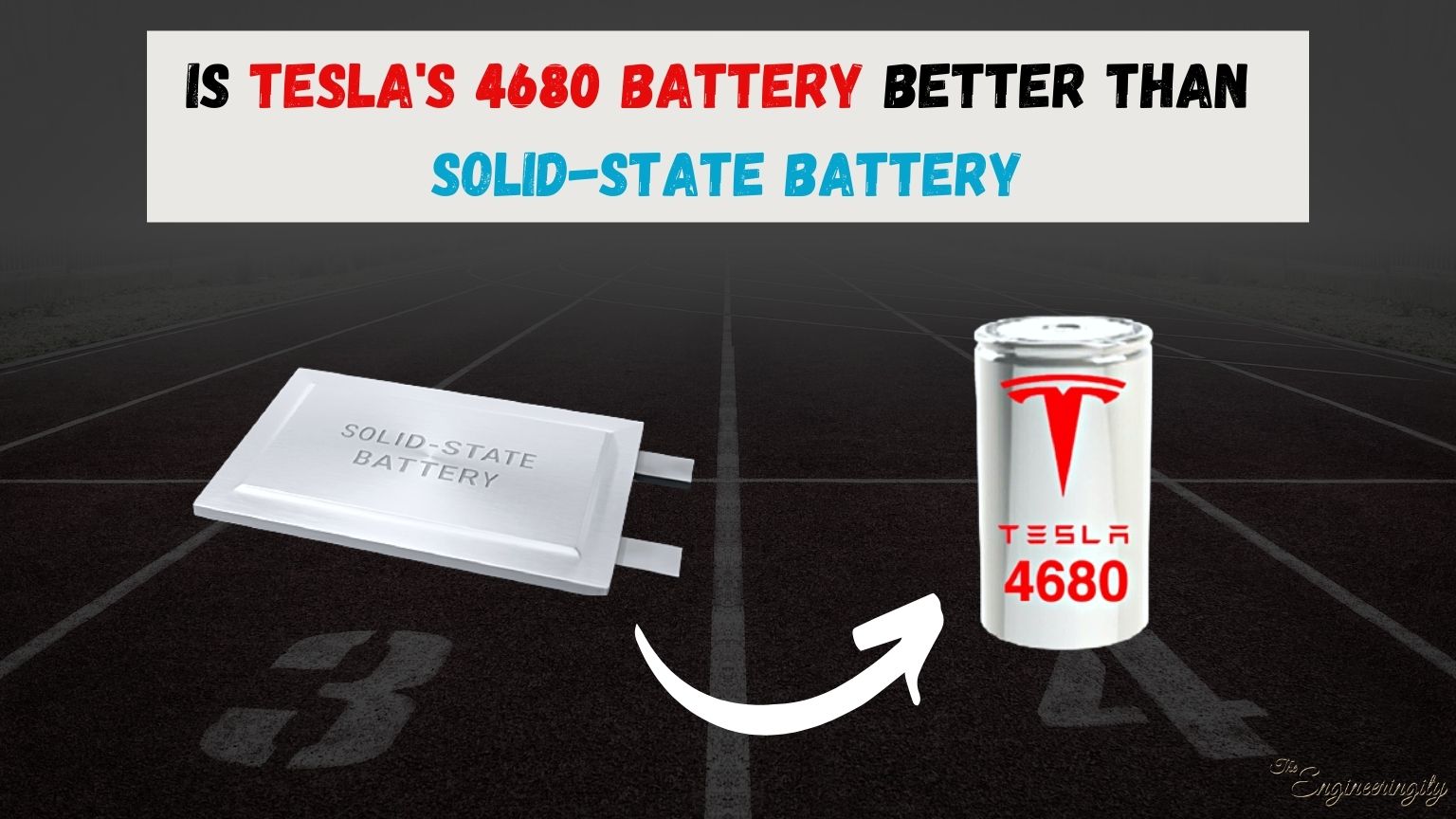
However, he recently shared that Tesla is working on a revolutionary 4680 battery that is going to transform the entire electronic vehicle industry. In today's composition, we are going to explore Tesla’s new 4680 battery and see whether is it as advanced as it is meant to be.

Tesla 4680 Battery | Solid State Battery

The lithium-ion battery that powers most consumer electronics in today's society was first introduced by British chemists in the 1970s. But it was not until later in 1985 be exact, that a man named Akira Yoshino developed the first functioning lithium-ion battery prototype, and in 1991 scientists working for Sony created the first commercially viable lithium-ion battery. So what makes this lithium-ion battery special, is that it's better than any other type of battery that was used before.

First Rechargeable Battery

For example, the first rechargeable lead-acid batteries were created in 1859 ten times larger require three times longer charging time, and had 5 times smaller power density than Lithium-ion batteries. So it's of no surprise that lithium-ion batteries overhauled the world in an instant. However despite being way better than any other type of battery previously used Lithium-ion batteries still have their drawbacks and lag behind virtually every other electronic component today.

What did Elon Musk reveal on Battery Day?

Batteries are the reasons why our technology is not evolving as fast as it could push top scientists and engineers are yet to find a way to restore more energy in smaller spaces. But Elon Musk has recently revealed some of the details of its new 4680 battery which could cause a battery revolution and completely change our world as we know it. Ever since 2013 Tesla has had Battery Day events where they reveal their latest progress in the field of batteries it is one of the biggest days for Tesla enthusiast boys as they know that batteries are holding back the process of EVs.

This time Elon Musk revealed Tesla's new 4680 structure of the battery and placed it for advanced properties. It’s different from the current Panasonic 2170 Lithium Cobalt acid battery not only in properties but also in the very much in the structure of the battery. 

The new 4680 battery will be tabless, expecting that it reduces the electrical path consequently minimizing the resistance and reducing the heat. Additionally rejecting the former design involving tabs makes these batteries easier to produce as now it's essentially a one-piece battery instead of having multiple tabs which are used to cause manufacturing problems. Finally, the new Tesla 4680 battery won’t contain cobalt like the previous batteries. 

Cobalt is a big component of batteries, but its disadvantage is that it's toxic to humans. The less hazardous material used in a car is better and Cobalt was substituted with high nickel cathodes which result in even better performance. These reforms essentially allowed Tesla to fit more power in the lesser space. Just visualize Model 3. The long-range battery pack holds 44162170 battery cells while the same job would be fulfilled with only 960 new 4680 cells. The fewer singular parts a car requires, the simpler is it to manufacture and the cheaper it becomes.

Charging Speed

Now that we know about the new trend of this battery design we should talk about how it's going to affect us the consumers. For beginners, it's going to be 6 times more effective than its antecedents and hold fight time more energy. The new 4680 battery cell is also double the current 2170 but it's going to be way more efficient and result in more range for battery space. Subsequently, due to its innovative tabless structure, its charging times will be insanely fast. It's estimated that charging the new Tesla Model 3 with a 4680 battery pack from 10 to 80% will take just 15 minutes. 

Compared to the 25 minutes it currently takes. In case you are running to charge the new battery pack from 0 to 50%, it's going to take just 7 minutes which is almost equivalent to a gas. The new 4680 battery is not only better in Pretty much every way imaginable but it's also expected to be 50% cheaper than the current batteries. Not only it's simpler to make but it's also going to be 30 to 40% less Steel which is one of the most precious components in batteries. 

Eventually, the new battery is more environmentally friendly than its previous matches. It requires less water to make and is less dangerous to the environment resulting in Tesla EVs being greener than they previously were. It's assumed to be used in the latest Tesla Model 3 which is expected to come out in 2022 and the Tesla semi which is a new generation of trucks that's been already settled for three years and currently is prepared to roll out in 2022. 

However, it's important to point out that while the prototypes of Tesla’s new 4680 batteries are operating the entire job is not yet completed. As the Q2 financial report in 2021 proclaimed they have successfully verified the performance and lifetime of 4680 cells generated at our Kato facility in California while extraordinary progress has been made they still are progressing and can achieve volume production.

Internal crash trial of our structural pack architecture with single-piece front equipment has been successful. We all know that Tesla is no stranger to manufacturing delays. Nearly every Tesla vehicle is delayed and it’s enraging enthusiasts. However, Elon Musk has been working on it for almost a decade trying to find a way to speed up the manufacturing process. It's shown by the Giga factory in Berlin which was unveiled in 2019 and was planned to be inaugurated in the summer of 2021, Wistfully it was limited, and then now its launch date has been shifted back to the end of 2021.

Production of 4680 Batteries

The company assumes to manufacture up to 100 Gw/hrs in batteries per year guaranteeing that Tesla can feel the huge demand for new car models. By 2030 Tesla presumes to have several more numerous Giga factories producing the new 4680 batteries and hold Battery protection of up to 3 TeraWatts per hour per year fixing its position as the Global EV leader. We are yet to see whether Elon Musk will succeed in satisfying his commitments even if he does it's going to be Revolutionary also the whole electric vehicle industry.

  • 0 Comments
Update: Now you can also enjoy listening to this post, click on the icon on the left below.

Hydrogen gas or H2 is a gas that contains a lot of chemical energy if you Ignite it, it will react with the oxygen in the air and release its energy using an explosion, and the only waste product is water. No CO2 nor any toxic gases just a bit of water. Of course, the uncontrolled explosion is great fun but how to properly use hydrogen as a fuel to power machines and vehicles, such as cars, well to do that we use a Fuel cell Hydrogen Fuel Cell.


    What is Hydrogen Fuel Cell?

    A hydrogen fuel cell is a device that takes hydrogen and oxygen and uses those to create electricity but how exactly does a fuel cell work let's find out.

    How does it work?

    Hydrogen Fuel Cell |working of Hydrogen Fuel Cell | What is Hydrogen Fuel Cell
    Hydrogen Fuel Cell

    The schematic diagram shows a Hydrogen Fuel cell in which on the left is the Anode and on the right side there is a Cathode, the anode, and the cathode are hollow areas in which gas can be sent inside, this is where the hydrogen gas goes and the oxygen goes into the cathode in between them there is a catalyst and an electrolyte(Proton exchange membrane).

    What happens when the system is turned on?

    When the system is turned on we get hydrogen in the anode and oxygen in the cathode, now the hydrogen inside the anode wants to go to the other side to meet with oxygen, and then react with it to form water. 

    But there is a problem with it, H2 cannot get to the other side because there is something between them the Electrolyte(Proton exchange membrane). The electrolyte is a material that only lets positively charged things get through it. 

    Why can't Hydrogen go through electrolytes?

    To know the reason behind it we need to go into the depth of hydrogen, A Hydrogen is not positive. A hydrogen atom consists of one proton and one electron one positive particle and one negative particle making the overall particle neutral.

    So the hydrogen in our system is neutral and not positive so it cannot go through the electrolyte. However, there is a solution to it which is the Catalyst. Now, what the catalyst does? 

    In this case, it does the splitting of electrons from the protons so that electrons of the hydrogen atoms are removed from their protons.

    So now we have got a bunch of protons and electrons, protons are also known as h+ which can pass right through the electrolyte because they are positive and they can meet with oxygen on the other side.

    Generation of Electricity

    But there is a problem, you see these are just protons and not really hydrogen anymore, so they can't react with oxygen and form water. 

    To do that the electrons that are still on the other side must be transported over to the cathode first you might have noticed that words I used electrons and transported, and for transporting or moving electrons there is a name for that which is Electricity. 

    That's right moving electrons is what we called Electricity, so we can simply connect a wire-like shown in the diagram, and then the electrons can simply able to float right through the wire to the other side, and they will meet up with the protons and can react which oxygen to form water which can leave the system and now what we have obtained is electric current running through a wire which we can then used to power a light, the bulb, a motor.

    This is how the power output of the fuel cell is obtained.

    Where are these Fuel cells used?

    Hydrogen fuel cells are useful in automobile industries. Hydrogen is arguably safer than gasoline, so safety isn't a huge concern for hydrogen.

    Currently, several companies around the world are working on the development of hydrogen cars.

    Advantages

    Hydrogen is the most abundant and readily available source of energy. To support zero carbon emissions hydrogen is one of the best alternatives and one of the clean energy.

    As it is having the highest calorific value it will be more powerful and more efficient. It is more efficient than many other green energy solutions. 

    One of the most important advantages is that it has a fast charging time compared to many other combustion engines.

    Drawbacks

    Now although the cell is such a clever invention does have some drawbacks, 

    First of all, it gets really hot when it is in operation and this can lead to fuel cells potentially damaging can themselves if it is cooled properly.

    Another disadvantage of a fuel cell is it is very expensive you can remember that catalyst we talked about that is actually made out of platinum which is of course so very expensive.

    Conclusion

    So now you know how a Fuel cell works. But keep in mind that Fuel cells are different from battery cells. I hope you enjoyed reading this post.

    What do you think will Hydrogen Fuel Cell be the future of electric vehicles?

    If you liked this post or topic please do consider commenting with your thoughts and share.

    • 0 Comments

     A portable power supply has become the lifeline of the modern technological world, especially the Lithium-ion Battery. Imagine a world where all cars are driven by Induction motors and not Internal combustion engines. Induction motors are far superior to IC engines in almost all engineering aspects, additionally being more robust and cheaper. 

    Another huge disadvantage of IC engines is that they only produce usable torque in a narrow band of engine RPM. Considering all of these factors, induction motors are definitely the perfect choice for an automobile. 


      What is the difference between an IC engine and an electric engine?

      Internal Combustion Engine (IC)

      Electric Engine (Induction Motor)

      Thousands of moving parts 

      Very few moving parts

      Mechanical balancing Issue

      No balancing issues

      Poor speed control

      Good speed control

      Not self-started

      Self-Started

      Low Acceleration

      High Acceleration

      Low starting torque

      High starting Torque

      Narrow speed range

      Wide speed range

      Why are Electric cars better?

      An electric car is a car that is propelled by one or more electric motors using energy stored in rechargeable batteries. Some diesel models claim beyond 700 miles on one tank, some models up to 1,000, and although very few people will ever have the discomfort of driving that far on one trip, electric vehicle range is still the topic that needs addressing to entice more people to reduce their local emissions. 

      Ev's average is somewhere around 300 miles from one charge, a huge leap forward from a barely triple figure of the past, but a far cry from the modern-day types of diesel that can achieve more than double this. 

      How do Electric cars have a connection with Solid-State Batteries?

      Arrangement of Batteries in series and parallel 

      Taking the example of the Tesla cell, it has a voltage between 3 - and 4.2. These cells are called solid-state batteries and they are having a structure like normal batteries.

      Many such Tesla cells are connected in series and in a parallel fashion to form a model. 16 such models are connected in series to form a battery pack in a Tesla car. Thus it forms a big battery on which the Tesla car runs. To know more about Solid State Batteries[Click Here]

      Who is working on SSB (Solid State Batteries)?

      Another world leader in battery power devices is Dyson famed for its vacuum cleaners and hair products. Dyson is the head of all competition when it comes to consumer electronics. 

      The company had previously announced the plans to build its own electric car testing for 2021 launch the plan was scrapped last, and the company still promises to be working on advancing their batteries technology, but so far its car project is pushed back it is not entirely canceled.

      And many companies are working on it but to the overheating of batteries, they are lagging.

      How do Electric Cars have an advantage?

      We're told that electric cars are the future. Petrol and diesel cars will be banned in the UK by 2030, and many European and American countries are following suit. 

      India also is in the race for electric cars and many automobile companies are on the verge to launch their models. Likewise, Tesla's electric car works on a total electric solid-state battery which is the showstopper in the automobile sector for its different approach to satisfying the need of people and care towards nature. 

      To take human life more towards the future. Tesla always comes up with innovative ideas for electric vehicles. 

      Conclusion

      Compared to Internal combustion engine (ICE) vehicles electric cars are quieter have no exhaust emissions and have lower overall emissions. Many electric car companies want to launch their own electric cars but they are still advancing in their batteries. 

      However, the constant power supply for an induction motor is the real barrier to achieving the induction motor to revolutionize the automation industry.

      The market for electric vehicles will be more significant in India in the future than ever seen before.

      • 0 Comments

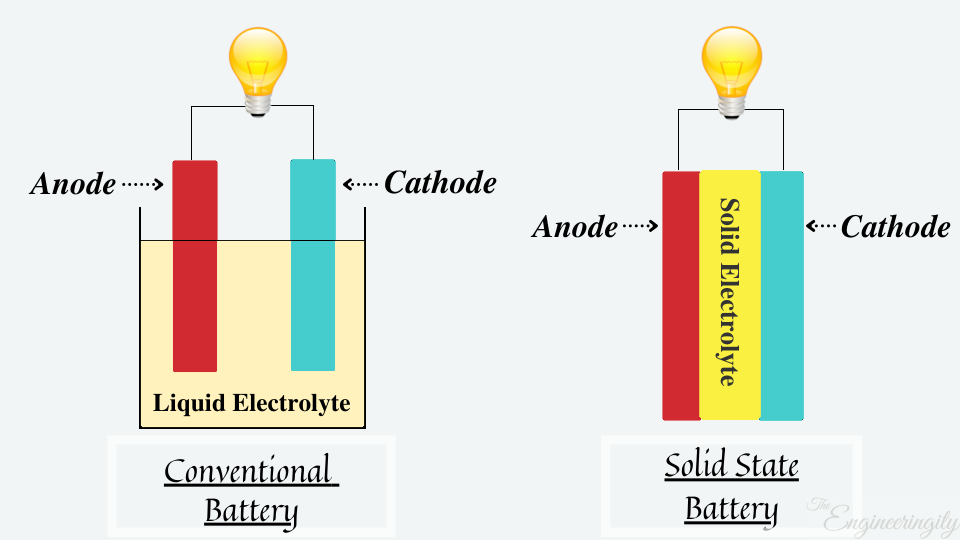
       Have you seen a few pictures of smartphone explosions, if you have noticed them carefully, the reason is the battery behind them? Those batteries use a liquid electrolyte, the liquid electrolyte is flammable and the chances are high for exploding of the battery. 

      But what about pacemakers and RFID readers? Pacemakers and RFID readers use solid-state electrolytes in their volatile batteries, and the chances of exploding are almost negligible. Solid-state batteries are the future of battery technology and consumer electronics and electric vehicles.

      What is solid state battery? | All about solid state battery


        What Solid-state Batteries are?

        • In solid-state batteries, the electrolyte used is solid form. An example of it is Lipon Lithium phosphate glass.
        • Compared to liquid electrolyte batteries(Conventional batteries), solid-state batteries are high in energy density because in liquid electrolytes large separators are used between the liquid cells.
        • Whereas solid-state batteries require a very thin barrier to prevent a short circuit.
        • Solid-state batteries can pack in as much energy as lithium-ion and normal liquid electrolyte battery separators come with 20 to 30 microns thickness. Whereas solid-state batteries can decrease this separated distance down to 3 to 4 microns charging time.
        • Solid-state batteries can charge 6 times faster than liquid-state batteries.

        • 5 Comments
        Older Posts Home

        Like and Share our Facebook page

        The Engineeringity

        Blog Archive

        • ►  2020 (13)
          • ►  September (3)
          • ►  October (5)
          • ►  November (2)
          • ►  December (3)
        • ►  2021 (32)
          • ►  January (1)
          • ►  February (2)
          • ►  March (3)
          • ►  April (3)
          • ►  May (5)
          • ►  June (2)
          • ►  July (3)
          • ►  August (4)
          • ►  September (2)
          • ►  October (2)
          • ►  November (2)
          • ►  December (3)
        • ►  2022 (21)
          • ►  January (3)
          • ►  February (2)
          • ►  March (2)
          • ►  April (1)
          • ►  May (1)
          • ►  June (2)
          • ►  July (2)
          • ►  August (2)
          • ►  September (1)
          • ►  October (2)
          • ►  November (1)
          • ►  December (2)
        • ►  2023 (16)
          • ►  January (2)
          • ►  February (2)
          • ►  March (2)
          • ►  April (1)
          • ►  May (1)
          • ►  June (2)
          • ►  August (1)
          • ►  September (2)
          • ►  October (1)
          • ►  November (1)
          • ►  December (1)
        • ▼  2024 (3)
          • ►  January (2)
          • ▼  June (1)
            • Japanese Brands Electric Car Aversion: Decoding Tr...

        Featured post

        Mini Project On "Hydraulic Powered Track".

        What is Hydraulics?  Hydraulics is a technology and applied science using engineering, chemistry, and other sciences involving liquids' ...

        About Blog


        Hi! I'm owner of Engineeringity

        Student by profession, joined blogger as a hobby, and want to explore more about curious things.

        Get latest updates straight to your inbox!

        Enter your email address:

        Delivered by FeedBurner

        Popular posts

        • Mini Project On "Hydraulic Powered Track".
          What is Hydraulics?  Hydraulics is a technology and applied science using engineering, chemistry, and other sciences involving liquids' ...
        • The Inventor of Aeroplane | Story of Shivkar Talpade
           The whole world knows that the first airplane was flown by Wright Brothers, But what the world doesn't know is that 8 years before the ...
        • The great visionary leader Chhatrapati Shivaji Maharaj
           Chhatrapati Shivaji Maharaj was a visionary leader and founder of the Maratha Empire in western India during the 17th century. He was born ...
        • Types of Engine placement in car | Front-Rear-Mid Engines
           Automakers all agree to place the engine in the front of cars, vans, and trucks, after over a century of innovation. Why do we do this? Wha...
        • History of Engineering | Importance of Engineering
          The word engineering has been derived from the term engineer and dates back to around 1325 and the word engineer in those times meant or wa...
        • The Rise and Fall of LML: India's 2nd Scooter Giant Falters
           You must know about this legend if you were also born in the 90s like me or even earlier than that. This scooter was used to carry both peo...

        Search this blog

        Labels

        automobile (22) Facts (12) Inventions (10) stories (10) 7 lessons (9) automotive-innovators (9) Engineering (7) electric vehicle (7) Hydrogen (6) Aircrafts (5) green-energy (5) Fuel cells (3) Projects (3) Fluid Mechanics (2) Solid State battery (2) festivals (2) drone (1)

        Pages

        • About Us
        • Disclaimer
        • Privacy Policy
        • Terms and Conditions
        • Contact Us
        • Sitemap

        Pages

        • Feedback Form
        • Feedback Survey
        • Complaint Form

        Copyright@2019-2022 Engineeringity All Right Reseved

        Created with by OmTemplates | Distributed By Gooyaabi Templates